01 / 2026 PROMPTSTopic-Setting Professors and Essay Topics
The topics for the LSESU Economics Society Essay Competition are exclusively set and developed by core professors of the LSE Economics Department. The themes consistently focus on cutting-edge real-world economic issues or the innovative application of classical theories, to foster students' capabilities in independent research, critical analysis and innovative thinking. The scoring criteria are also formulated in full alignment with the academic standards of university-level economics essays. Participants are required to demonstrate accurate understanding of economic theories, sound use of supporting evidence, and competent critical analysis skills.
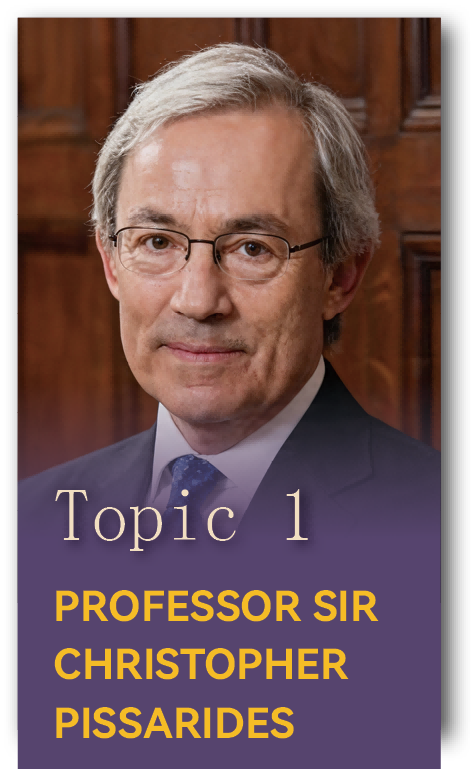
Topic 01TECHNOLOGY & WORKER WELLBEING
PROFESSOR SIR CHRISTOPHER PISSARIDES (REGIUS PROFESSOR OF ECONOMICS AT LSE)
- Winner of the 2010 Nobel Prize in Economic Sciences
- Fellow of the Econometric Society
- Fellow of the British Academy
- Member of the Academia Europaea
- Knighted in 2013
- Lifetime Honorary Member of the American Economic Association
- Conferred the Grand Cross of the Order of Merit of the Republic of Cyprus in 2011
- Served as President of the European Economic Association in 2011
The Impact and Restructuring of Employment and Future Work Patterns Driven by Artificial Intelligence and Digitalization; Macroeconomics of Labour Markets; Macroeconomic Policy; Economic Growth and Structural Change.
Representative Work: Equilibrium Unemployment Theory: A Canonical and Authoritative Reference in the Economics of Unemployment.
● TECHNOLOGY & WORKER WELLBEING
Evidence shows that workers like to work from home, say one day a week, but they hate monitoring devices that the firm might use to see how they allocate their time during the home day. What do you think the firm should do, if it wants to motivate its workers by giving them something that they like, but at the same time ensure it gets its money’s worth during working hours?
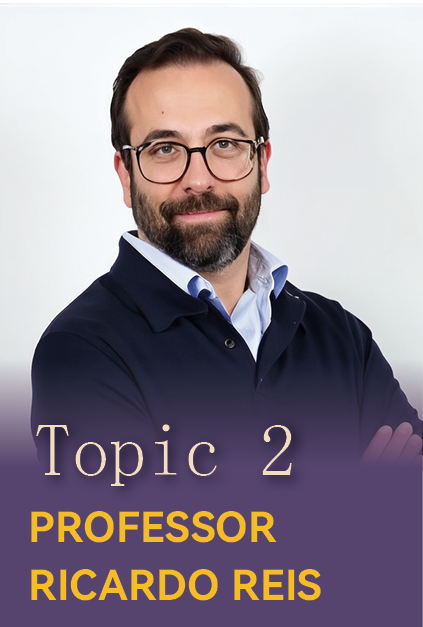
Topic 02ENERGY & ECONOMICS PROFESSOR RICARDO REIS
PROFESSOR OF ECONOMICS AT LSE
- A.W. Phillips Professor of Economics
- Fellow of the British Academy
- Fellow of the Academia de Ciências de Lisboa
- 2017 Banque de France/Toulouse School of Economics Junior Prize
- 2021 Yrjö Jahnsson Award (the biennial highest European honour in economics)
- 2017 Banque de France/Toulouse School of Economics Junior Prize
- Distinguished Scholar at the Bank of Canada
- Fellow of the Econometric Society
- 2022 Carl Menger Prize
- Former Editor of the Journal of Monetary Economics
- Serves as an advisor to several central banks, including the Bank of England, Sveriges Riksbank, Federal Reserve Bank of Richmond, and the European Stability Mechanism.
Macroeconomics (Monetary and Fiscal Policy); Inflation; Business Cycles; Central Bank Liquidity Facilities (Swap Lines).
Selected Publications: Central Bank Swap Lines: Evidence on the Effects of the Lender of Last Resort;Debt Revenue and the Sustainability of Public Debt.● ENERGY & ECONOMICS
Following a sharp rise in UK energy prices, prepare a brief for a central bank on how monetary policy should respond. Take into account that the UK is a net importer of energy, and that the Bank of England has a mandate of keeping inflation steady at 2%.
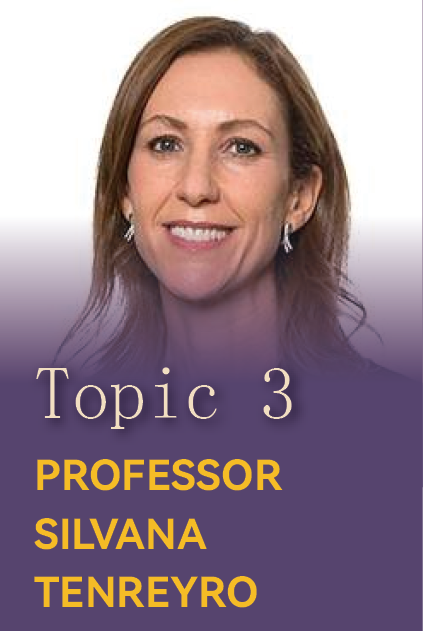
Topic 03AI & EMPLOYMENT PROFESSOR SILVANA TENREYRO
PROFESSOR OF ECONOMICS AT LSE
- Fellow of the British Academy and the Econometric Society
- Fellow of the Econometric Society
- Former Director of the International Macroeconomics and Finance Programme, Centre for Economic Policy Research (CEPR)
- Former President of the European Economic Association
- Commander of the Order of the British Empire (CBE)
- 2021 Yrjö Jahnsson Award (the highest European honour in economics)
Macroeconomics (with a particular focus on monetary policy), International Economics, Macroeconomic Development.
Selected Publications: Dollar Dominance and the Transmission of Monetary Policy; Trade Fragmentation, Inflationary Pressures and Monetary Policy.
● AI & EMPLOYMENT
Suppose AI reduces the number of people needed to perform a large fraction of jobs, threatening to cause high unemployment. What measures should be put in place to limit inequality in pay (and, ideally, also in hours worked)?
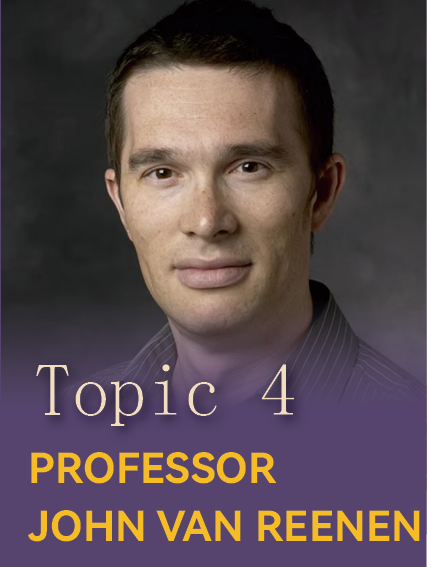
Topic 04TAXATION & FAIRNESS PROFESSOR JOHN VAN REENEN
PROFESSOR OF ECONOMICS AT LSE
- Officer of the Order of the British Empire (OBE)
- 2009 Yrjö Jahnsson Award
- Fellow of the British Academy (FBA)
- Fellow of the Econometric Society
- Former Associate Editor of the American Economic Review, Quarterly Journal of Economics, and Econometrica
Economics, Public Policy, Competition Policy
Selected Publications: The International Empirics of Management; Opening up Military Innovation: Causal Effects of Reforms to U.S. Defense Research.● TAXATION & FAIRNESS
Is it possible and desirable to raise taxation on the top 1%?
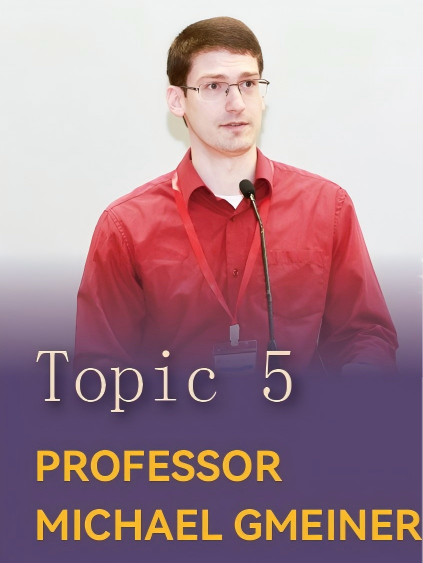
Topic 05GREEN TECHNOLOGY PROFESSOR MICHAEL GMEINER
ASSISTANT PROFESSOR OF ECONOMICS AT LSE
- Ph.D. in Economics, Northwestern University
- Deputy Undergraduate Programme Director
Health Economics, Industrial Organization.
Selected Publications: • Comparing the cost of cirrhosis to other common chronic diseases: A longitudinal study in a large national insurance database. • Can patterns of household purchases predict the outcome of US presidential elections? • Qualitative, rather than quantitative, differences between HLA-DQ alleles affect HLA-DQ immunogenicity in organ transplantation.● GREEN TECHNOLOGY
How will development and adoption of climate-friendly technologies affect inequality and the distribution of wealth?