


OFFICIAL ORGANISER
LSE's largest and most influential society - LSESU Economics Society. Exclusive support of the LSE Economics Department
Official website:https://lsesueconsoc.org
• Nobel Economists & LSE Professors
Essay questions set by LSE Nobel laureates and distinguished professors
• 9 Years of Excellence
Launched in 2017, with a strong reputation especially among UK secondary schools
• Completely Free
One entry per student. No registration or submission fees
• Prestigious Award
Certificates jointly signed by the question-setting professor and the LSESU Economics Society
• 60+ Countries
Participants from over 60 countries and regions worldwide
• Advanced Opportunities
Top-performing students will advance to elite economics challenges and selective camp
Introduction
LSESU Economics Society Essay Competition
The LSESU Economics Society Essay Competition is a global academic event officially hosted by the LSESU Economics Society, tailored for outstanding high school students. All essay prompts are set by current professors in the LSE Department of Economics.
Past question setters include leading scholars: Professor Sir Christopher Pissarides (2010 Nobel Laureate in Economics), Professor Sir Tim Besley (former President of the Royal Economic Society), and Professor Sir Richard Layard (LSE Emeritus Professor, founder of happiness economics). Since its launch in 2017, the competition has drawn participants from over 60 countries and regions worldwide. Widely regarded as one of the most prestigious economics writing activities among UK high schools, it offers dual certification from LSE professors and the Economics Society for outstanding submissions. Awards serve as strong academic evidence for applications to economics programmes at top universities globally, marking a key step toward entering the world's leading economics institutions.
Topic-Setting Professors and Essay Topics
The topics for the LSESU Economics Society Essay Competition are exclusively set and developed by core professors of the LSE Economics Department. The themes consistently focus on cutting-edge real-world economic issues or the innovative application of classical theories, to foster students' capabilities in independent research, critical analysis and innovative thinking. The scoring criteria are also formulated in full alignment with the academic standards of university-level economics essays. Participants are required to demonstrate accurate understanding of economic theories, sound use of supporting evidence, and competent critical analysis skills.
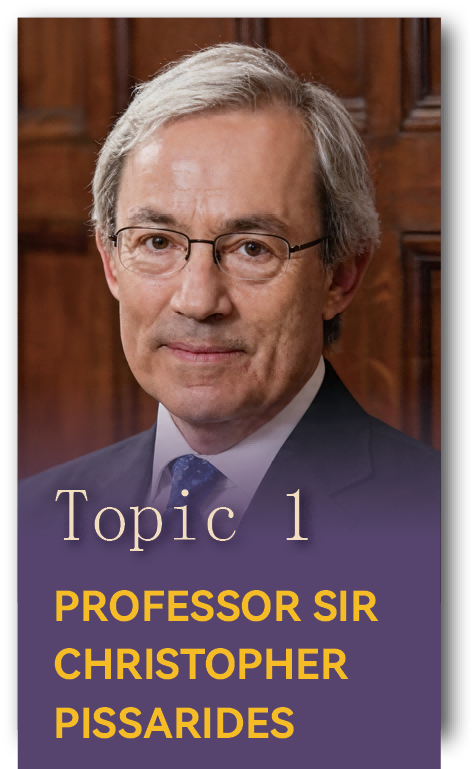
PROFESSOR SIR CHRISTOPHER PISSARIDES (REGIUS PROFESSOR OF ECONOMICS AT LSE)
- Winner of the 2010 Nobel Prize in Economic Sciences
- Fellow of the Econometric Society
- Fellow of the British Academy
- Member of the Academia Europaea
- Knighted in 2013
- Lifetime Honorary Member of the American Economic Association
- Conferred the Grand Cross of the Order of Merit of the Republic of Cyprus in 2011
- Served as President of the European Economic Association in 2011
Representative Work: Equilibrium Unemployment Theory: A Canonical and Authoritative Reference in the Economics of Unemployment.
● TECHNOLOGY & WORKER WELLBEING
Evidence shows that workers like to work from home, say one day a week, but they hate monitoring devices that the firm might use to see how they allocate their time during the home day. What do you think the firm should do, if it wants to motivate its workers by giving them something that they like, but at the same time ensure it gets its money’s worth during working hours?
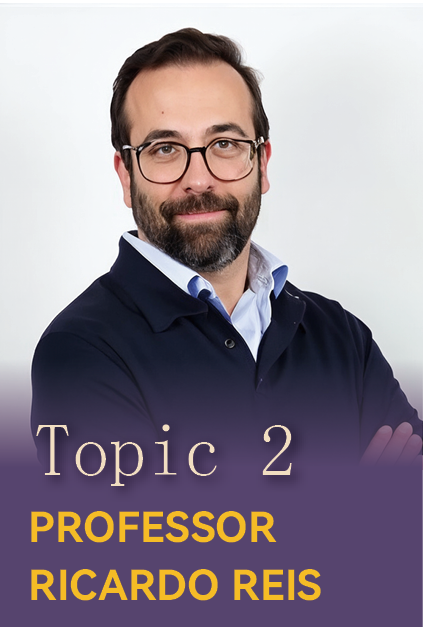
PROFESSOR OF ECONOMICS AT LSE
- A.W. Phillips Professor of Economics
- Fellow of the British Academy
- Fellow of the Academia de Ciências de Lisboa
- 2017 Banque de France/Toulouse School of Economics Junior Prize
- 2021 Yrjö Jahnsson Award (the biennial highest European honour in economics)
- 2017 Banque de France/Toulouse School of Economics Junior Prize
- Distinguished Scholar at the Bank of Canada
- Fellow of the Econometric Society
- 2022 Carl Menger Prize
- Former Editor of the Journal of Monetary Economics
- Serves as an advisor to several central banks, including the Bank of England, Sveriges Riksbank, Federal Reserve Bank of Richmond, and the European Stability Mechanism.
● ENERGY & ECONOMICS
Following a sharp rise in UK energy prices, prepare a brief for a central bank on how monetary policy should respond. Take into account that the UK is a net importer of energy, and that the Bank of England has a mandate of keeping inflation steady at 2%.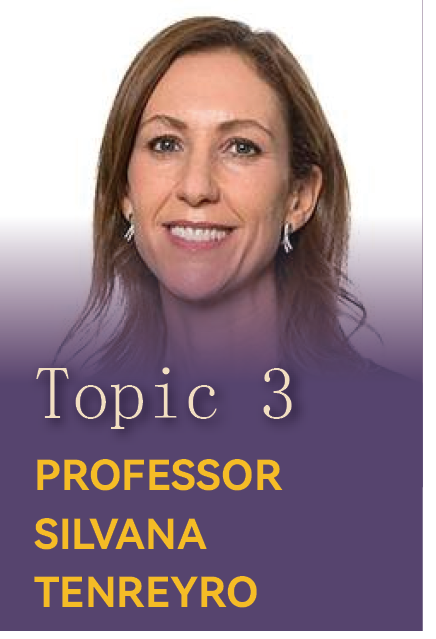
PROFESSOR OF ECONOMICS AT LSE
- Fellow of the British Academy and the Econometric Society
- Fellow of the Econometric Society
- Former Director of the International Macroeconomics and Finance Programme, Centre for Economic Policy Research (CEPR)
- Former President of the European Economic Association
- Commander of the Order of the British Empire (CBE)
- 2021 Yrjö Jahnsson Award (the highest European honour in economics)
Selected Publications: Dollar Dominance and the Transmission of Monetary Policy; Trade Fragmentation, Inflationary Pressures and Monetary Policy.
● AI & EMPLOYMENT
Suppose AI reduces the number of people needed to perform a large fraction of jobs, threatening to cause high unemployment. What measures should be put in place to limit inequality in pay (and, ideally, also in hours worked)?
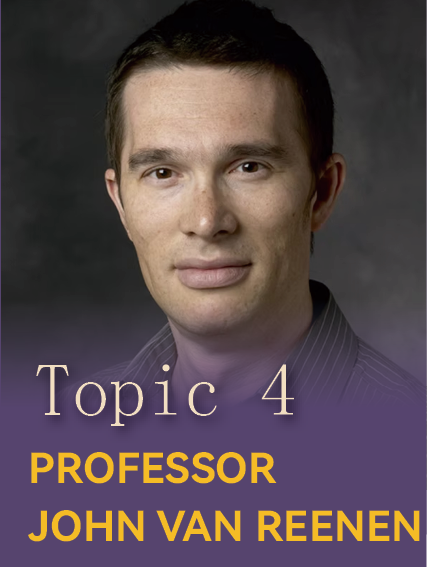
PROFESSOR OF ECONOMICS AT LSE
- Officer of the Order of the British Empire (OBE)
- 2009 Yrjö Jahnsson Award
- Fellow of the British Academy (FBA)
- Fellow of the Econometric Society
- Former Associate Editor of the American Economic Review, Quarterly Journal of Economics, and Econometrica
Selected Publications: The International Empirics of Management; Opening up Military Innovation: Causal Effects of Reforms to U.S. Defense Research.
● TAXATION & FAIRNESS
Is it possible and desirable to raise taxation on the top 1%?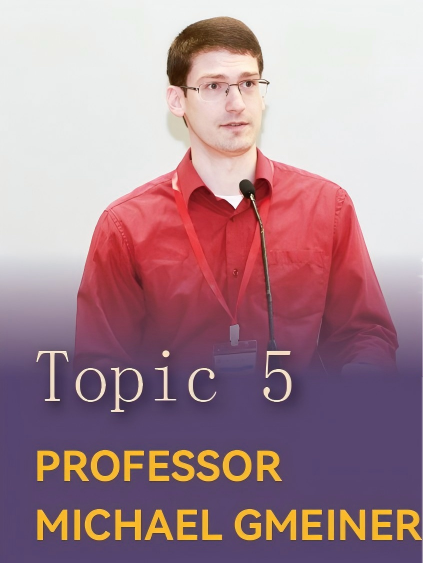
ASSISTANT PROFESSOR OF ECONOMICS AT LSE
- Ph.D. in Economics, Northwestern University
- Deputy Undergraduate Programme Director
Selected Publications:
• Comparing the cost of cirrhosis to other common chronic diseases: A longitudinal study in a large national insurance database.
• Can patterns of household purchases predict the outcome of US presidential elections?
• Qualitative, rather than quantitative, differences between HLA-DQ alleles affect HLA-DQ immunogenicity in organ transplantation.
● GREEN TECHNOLOGY
How will development and adoption of climate-friendly technologies affect inequality and the distribution of wealth?Detailed Scoring Dimensions
| Scoring Criteria | Marks | Key Assessment Focus |
|---|---|---|
| Argument and Originality | 25 | Is the argument well-articulated, logically consistent, and innovative? Does it go beyond textbook answers and provide original insight? |
| Application of Economic Theories | 20 | Are relevant economic models, frameworks, or concepts used correctly and effectively to support the argument? |
| Evidence and Examples | 15 | Are claims supported by empirical studies, historical examples, case studies, or credible data? |
| Critical Analysis | 15 | Is there engagement with opposing views, trade-offs, limitations, or alternative explanations? Are counterarguments addressed thoughtfully? |
| Structure and Clarity | 10 | Is the essay clearly structured with logical flow? Are the introduction and conclusion effective? Is the language precise? |
| Citations and Sources | 10 | Are high-quality sources used (academic, institutional)? Are references cited correctly and consistently? |
| Topic Relevance | 5 | Does the essay stay on topic and directly answer the question asked? |
Awards and Honours
| Award Category | Proportion / Number of Winners | Prize Details |
|---|---|---|
| High Distinction | Top 5-10% | Certificate signed by the President of the LSESU Economics Society |
| Prompt Podium | 3 per essay prompt | Certificate signed by LSESU Economics Society and adjudicating professor for each essay prompt |
| Prompt Winner | 1 per essay prompt | Certificate signed by LSESU Economics Society and adjudicating professor for each essay prompt, and additional £50 money prize |
| Overall Winner | 1 winner across all entries | Certificate signed by LSESU Economics Society and adjudicating professor for each essay prompt, and additional £100 money prize |
| LSE Offer Holder Winner | 1 winner out of LSE offer holders | Certificate signed by LSESU Economics Society and the LSE’s Head of Department of Economics, and a £100 money prize |
* Only winning students receive certificates. Participation certificates are not available.
* Award winners will advance to elite economics challenges and selective camp
Eligibility and Requirements
● Eligibility
2026 / 2027 graduates recommended, open to all secondary students
Essay Requirements
• Language: English
• Word Count: Maximum 1500 words (excluding references)
• Citation Format: Harvard referencing style is recommended
• Topic Selection: Entrants can only submit one response to one of the 5 questions.
• Originality: Plagiarism and AI-generated content are strictly forbidden and adequate referencing is vital. All essays will be screened and any found to be in breach of these requirements will be immediately disqualified.
● Key Dates
• Submission Deadline: September 1, 2026 @23:59PM (GMT+1)
* Late submissions will not be accepted.
• Results Announcement: October 2026 (Tentative)